Ohio Financial Literacy Standards and Mandates
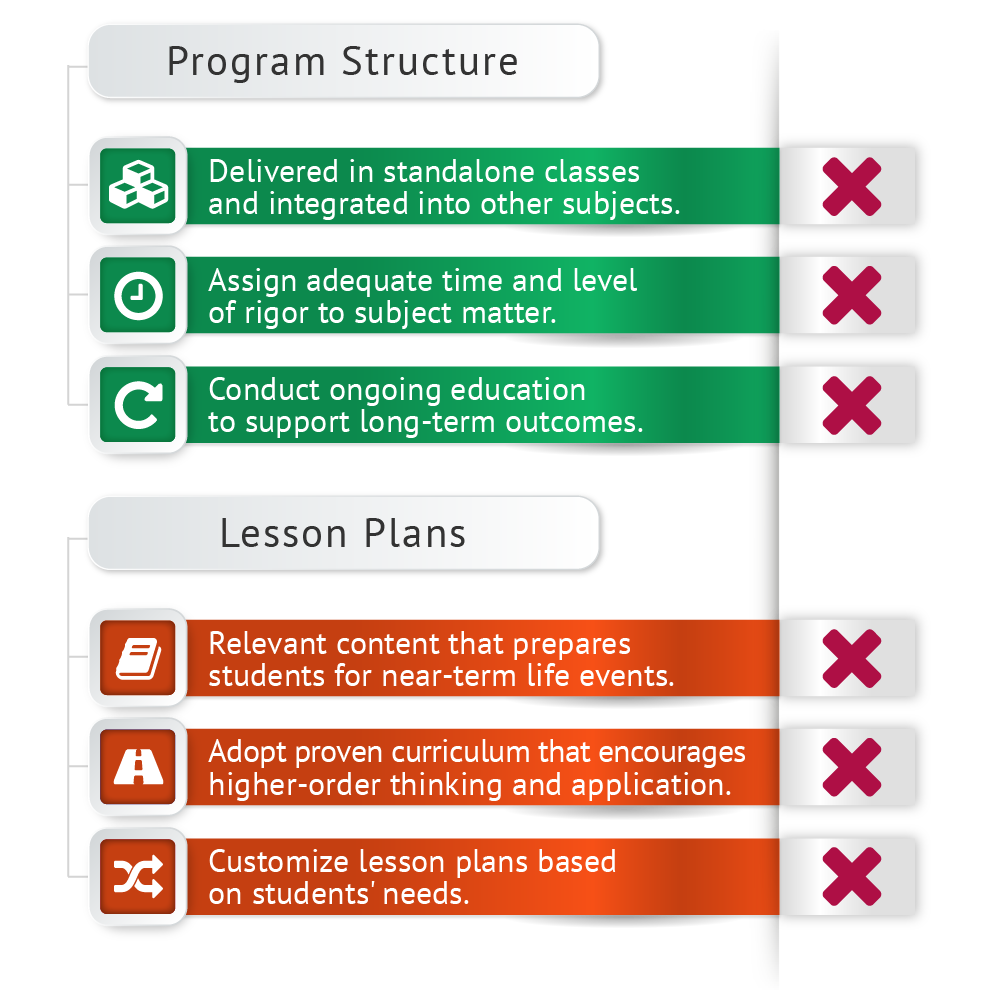
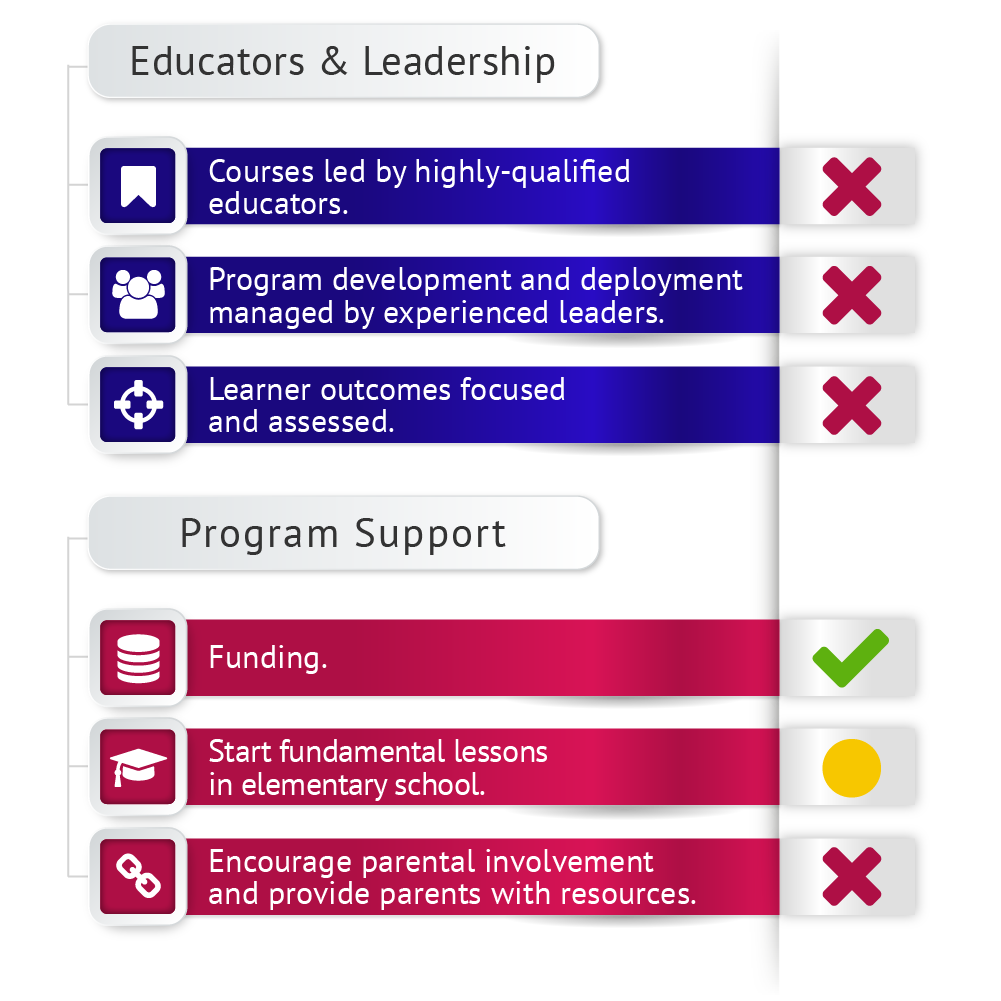
Ohio has mandated that starting with students entering ninth grade on or after July 1, 2022 (the class of 2026), they must earn a half-credit in financial literacy to meet graduation requirements. Although the current mandate represents progress toward ensuring students pick up financial knowledge, it fails to meet the minimum education standards for other core subjects taught in high school; and students who complete the coursework proposed will not be prepared for near-term financial challenges.
While our review is critical, we want to express our gratitude to everyone dedicated to advancing legislation aimed at teaching financial literacy. Thank you for your time and effort in developing this bill to its current stage. Our critique stems from a place of constructive feedback to improve existing mandates and enhance bills to ensure they make a significant and lasting impact on our youth. We are committed to fostering a future where financial literacy is not just taught but is impactful and meaningful for the generations to come.
OH Financial Literacy Standards Review – NFEC Ranking
Ohio has mandated that starting with students entering ninth grade on or after July 1, 2022 (the class of 2026), they must earn a half-credit in financial literacy to meet graduation requirements.
Although the current mandate represents progress toward ensuring students pick up financial knowledge, it fails to meet the minimum education standards for other core subjects taught in high school; and students who complete the coursework proposed will not be prepared for near-term financial challenges. Read more about the Ohio Financial Literacy Mandate.

Ohio Financial Literacy Mandates
Recommended Policy for OH Financial Literacy Programs
To address the gap in standards for personal finance education, the National Financial Educators Council has developed a set of benchmarks for all grade levels, K-12. This policy guide offers legislatures a framework that standardizes educational quality and learner outcomes to provide the best possible financial education for American youth.
The Standards Guide is based on the notion that financial education should be treated the same as any other topic taught in schools and that all students should at minimum be capable of making near-term financial decisions.

National Standards for Financial Education
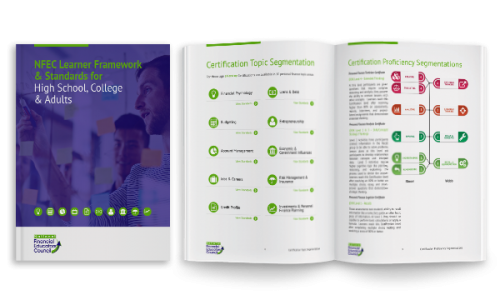
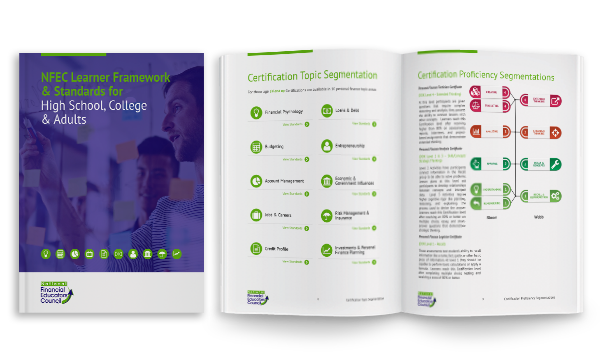
Financial Literacy Standards for Older Youth & Adults (High School through Adults)
Although there is no direct mandate by the Ohio State Board of Education, it is recommended that national standards be implemented. Financial education is a unique subject; all participants have developed financial habits and relationships with money before instruction begins.
National standards are those that have been proven in empirical and theoretical research to produce the highest improvements in participant test scores.
Financial Literacy Standards for Kids (Kids PK through 8th Grade)
In collaboration with education leader Heidi Jacobs, the NFEC created these financial literacy standards to define learning goals and educational targets for optimal child financial education. Guided by strong pedagogical theory, the standards ensure that instructional targets are age- and developmentally-appropriate and that lessons can be effectively scaffolded. Standards represent five sections based on topic areas in the NFEC curriculum.

Standards for Financial Education Instructors
The NFEC teamed with the well-known Danielson Group to develop the first and only national standards for financial educators – The Framework for Teaching Personal Finance – to define optimal educator skill sets and performance levels. The framework also identifies the financial educator responsibilities empirically proven to produce highest gains in participant test scores. This framework is used in all 50 states, including Ohio.